

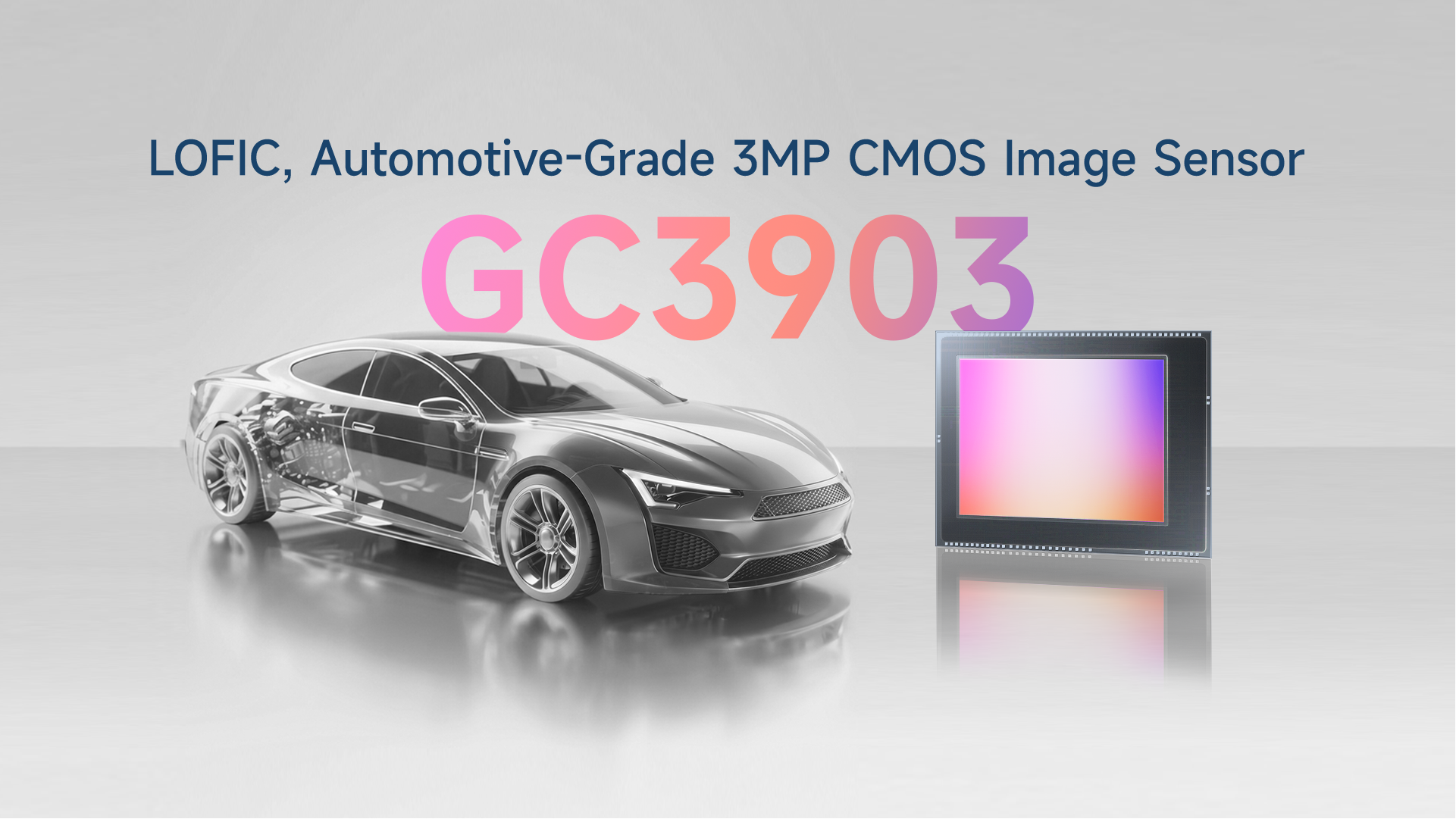
According to Sigmaintell, the automotive market is entering a new phase of intelligent-vehicle competition, with the number of cameras per vehicle expected to rise to more than 11. Demand for front-view, surround-view, and in-cabin camera applications continues to grow.
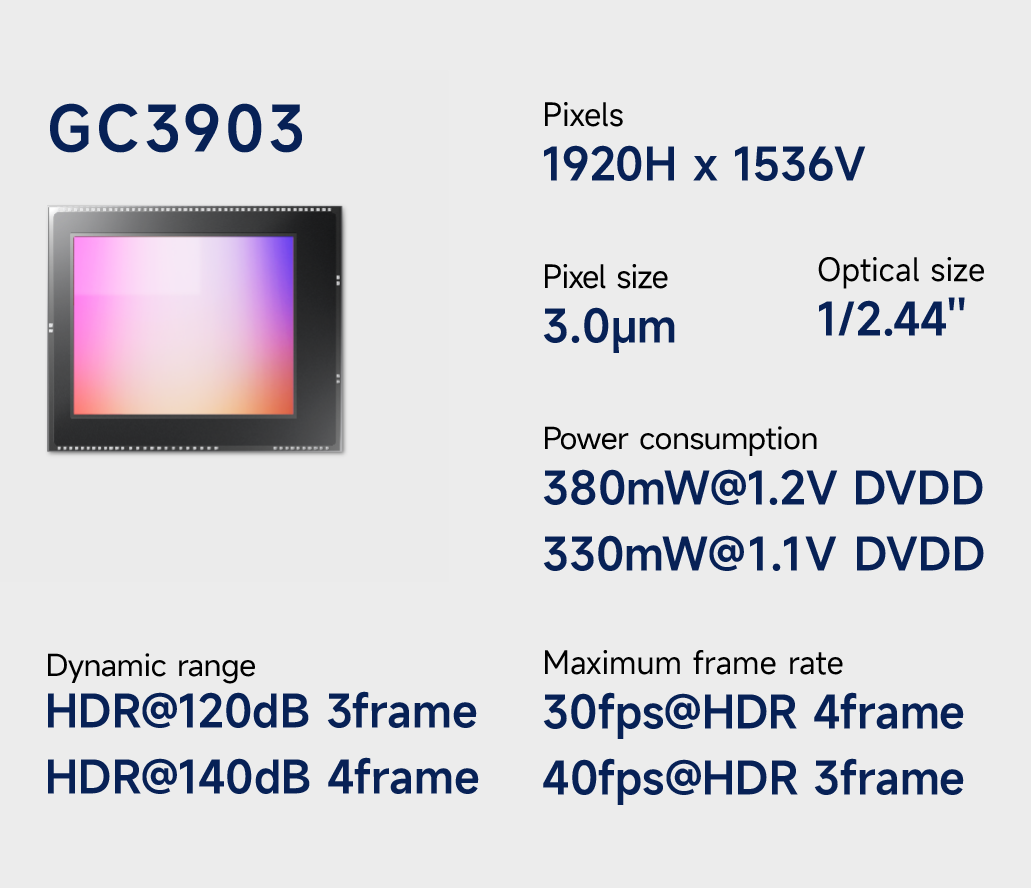
GalaxyCore recently launched GC3903, its first automotive-grade 3-megapixel CMOS image sensor. The product features a 3.0 μm pixel size, a 1/2.44-inch optical format, and a resolution of 1920H × 1536V. Designed for automotive surround-view, side-view, rear-view, and streaming rearview mirror applications, GC3903 supports LOFIC* HDR imaging, LED flicker mitigation, and low-power operation. It meets automotive reliability requirements and supports GalaxyCore’s high-reliability ACOM packaging. (*Note: LOFIC stands for “Lateral Overflow Integration Capacitor”)
LOFIC HDR for Improved Details in Both Highlights and Shadows
High dynamic range (HDR) is a key technology direction for automotive CIS. High-contrast driving scenarios, such as tunnel entrances and exits, night driving, and underground parking garages, require sensors with a wider dynamic range.
GC3903 uses GalaxyCore’s LOFIC technology to deliver a dynamic range of up to 140 db. LOFIC adds an overflow capacitor to the pixel structure, increasing pixel charge capacity and helping prevent highlight overexposure. This enables single-exposure HDR imaging with low noise and no motion artifacts.
Understand GC LOFIC technology in one video
Tests show that in high-dynamic-range scenarios such as entering and existing tunnels, GC3903 helps avoid highlight overexposure and loss of shadow details, allowing vehicle cameras to capture roads, vehicles, pedestrians, traffic signs, and other key information more completely.


GC3903 HDR performance
Supports LED Flicker Mitigation (LFM)
LED traffic lights and similar devices often use high-frequency dimming. While they appear continuously lit to the human eye, cameras may capture flickering or incomplete signals if sampling occurs when the LED is dimmed or off.


Illustration of the LFM
Using the LOFIC approach, GC3903 extends dynamic range within a single exposure, reducing the need for extremely short exposures to suppress highlights. This improves the likelihood of capturing complete LED signal information and reduces the risk of image distortion caused by LED flicker.
High-Temperature Performance and Low-Power Design
As the number of cameras per vehicle continues to increase, sensor power consumption has a direct impact on vehicle-level energy management. GC3903 delivers HDR imaging performance with power consumption as low as 330 mW, compared with about 450 mW for comparable products in the industry, helping reduce power consumption in multi-camera systems.
GC3903 also integrates an ISP and a temperature sensor, enabling it to adjust image parameters based on changes in ambient temperature. Automotive cameras are required to operate reliably under high temperature, strong light, and long-duration conditions. By dynamically tuning ISP settings according to temperature variations, GC3903 ensures stable performance and delivers consistent, high-quality imaging across different thermal environments.
Patented ACOM Packaging Improves Module Reliability
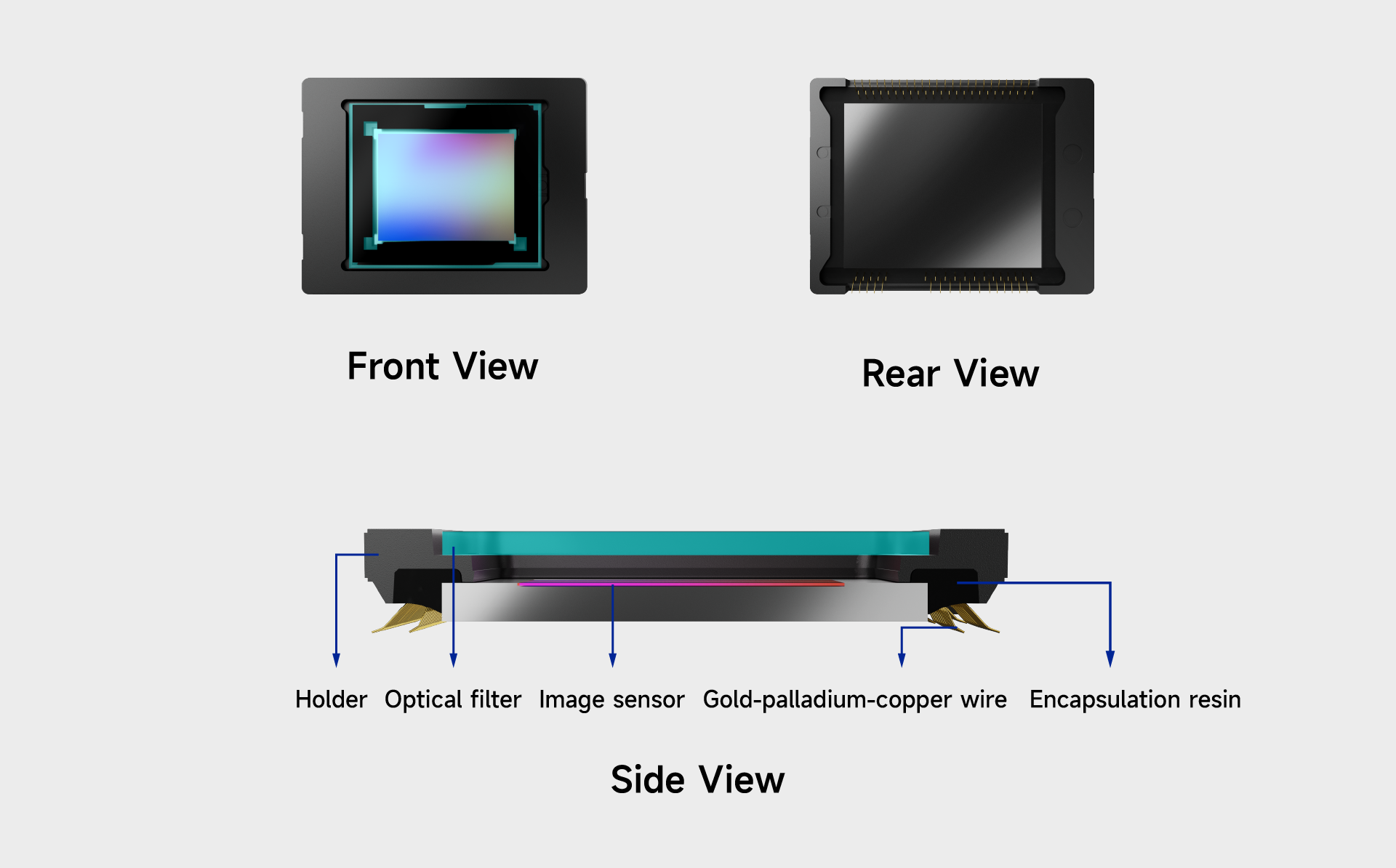
GC3903 supports GalaxyCore’s patented ACOM packaging solution. The sensor’s light-sensing area is located in a sealed space between the holder and the optical filter. This design helps isolate contamination risks from the FPC and the cut edges of the sensor chip, significantly reduces moving particles, and improves imaging stability for vehicle cameras in vibration environments.
ACOM packaging features a dual‑row wires layout, increasing the number of pins to 1.4 times that of conventional designs and significantly enhancing reliability. In addition, this packaging solution is compatible with surface‑mount technology (SMT) and does not require the dedicated mounting equipments or solder paste, which helps increase module production efficiency and offers advantages in reliability, manufacturing convenience, and overall cost.
End-to-End Automotive Reliability Coverage
GalaxyCore has achieved IATF 16949 certification across design, manufacturing, packaging, and testing, covering automotive product development, production, quality control, and delivery.
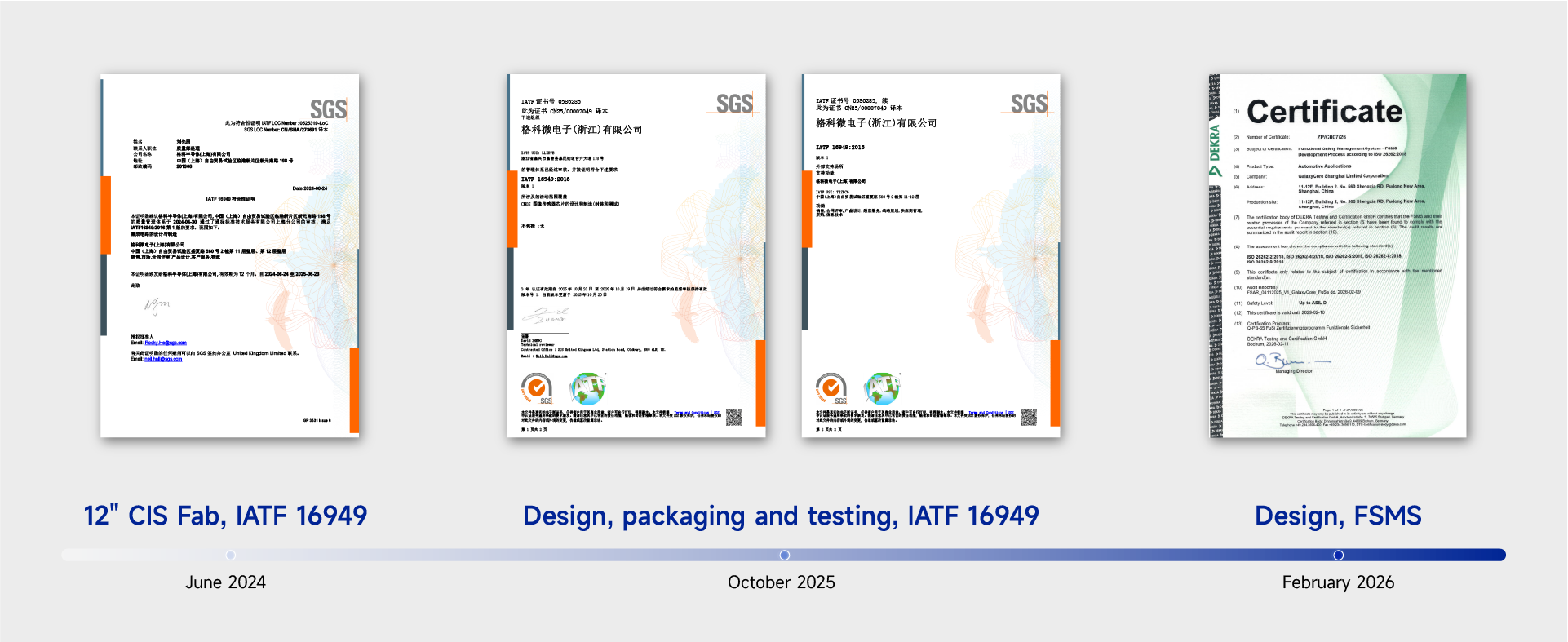
On this basis, GalaxyCore has also acquired Functional Safety Management System (FSMS) certification, further establishing development processes and management mechanisms that comply with automotive functional safety requirements, providing assurance for GC3903 and other automotive CIS products to enter the automotive supply chain.
The GC3903 complies with the AEC‑Q100 Grade 2 standard and meets the requirements of ISO 26262-compliant functional safety level: ASIL‑B.
GC3903 is one of GalaxyCore’s CIS products built on its own 12-inch fab platform and among the first to commercialize its LOFIC technology. Leveraging its Fab-Lite model, GalaxyCore can better coordinate product design, manufacturing processes, and packaging solutions. This helps shorten product iteration cycles, improve performance optimization efficiency, and strengthen the competitiveness of its automotive-grade products in quality, delivery, and cost.
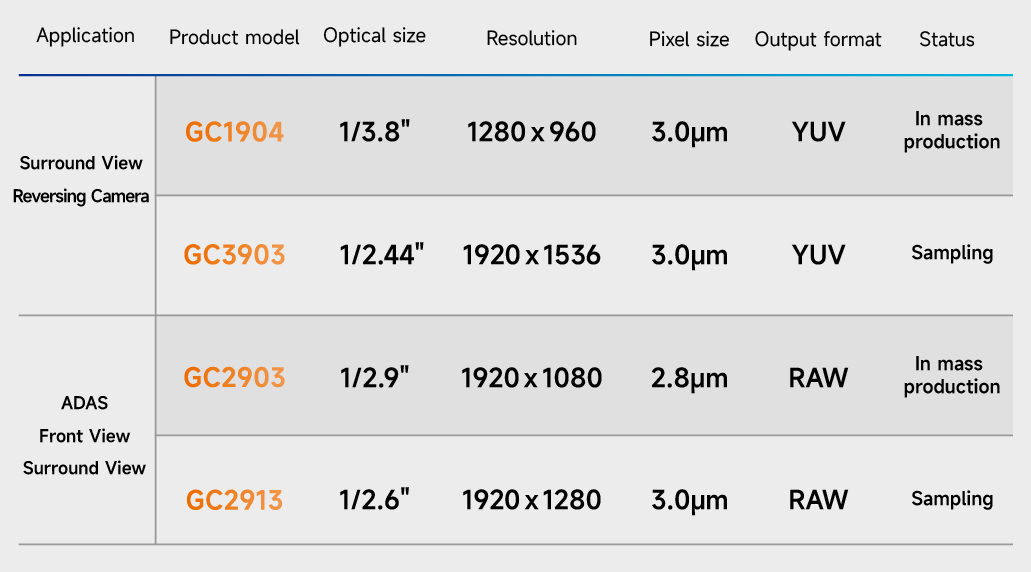
GalaxyCore’s automotive-grade image sensor portfolio now covers 1.3MP, 2MP, and 3MP resolutions, supporting surround-view, side-view, rear-view, and reversing camera applications.
Looking ahead, GalaxyCore will continue to address the imaging needs of intelligent vehicles and expand its front-view and in-cabin product portfolio. The company will continue to develop key technologies such as HDR, low power, LFM, and advanced packaging, providing global automotive customers with high-performance, high-reliability automotive CIS solutions.