

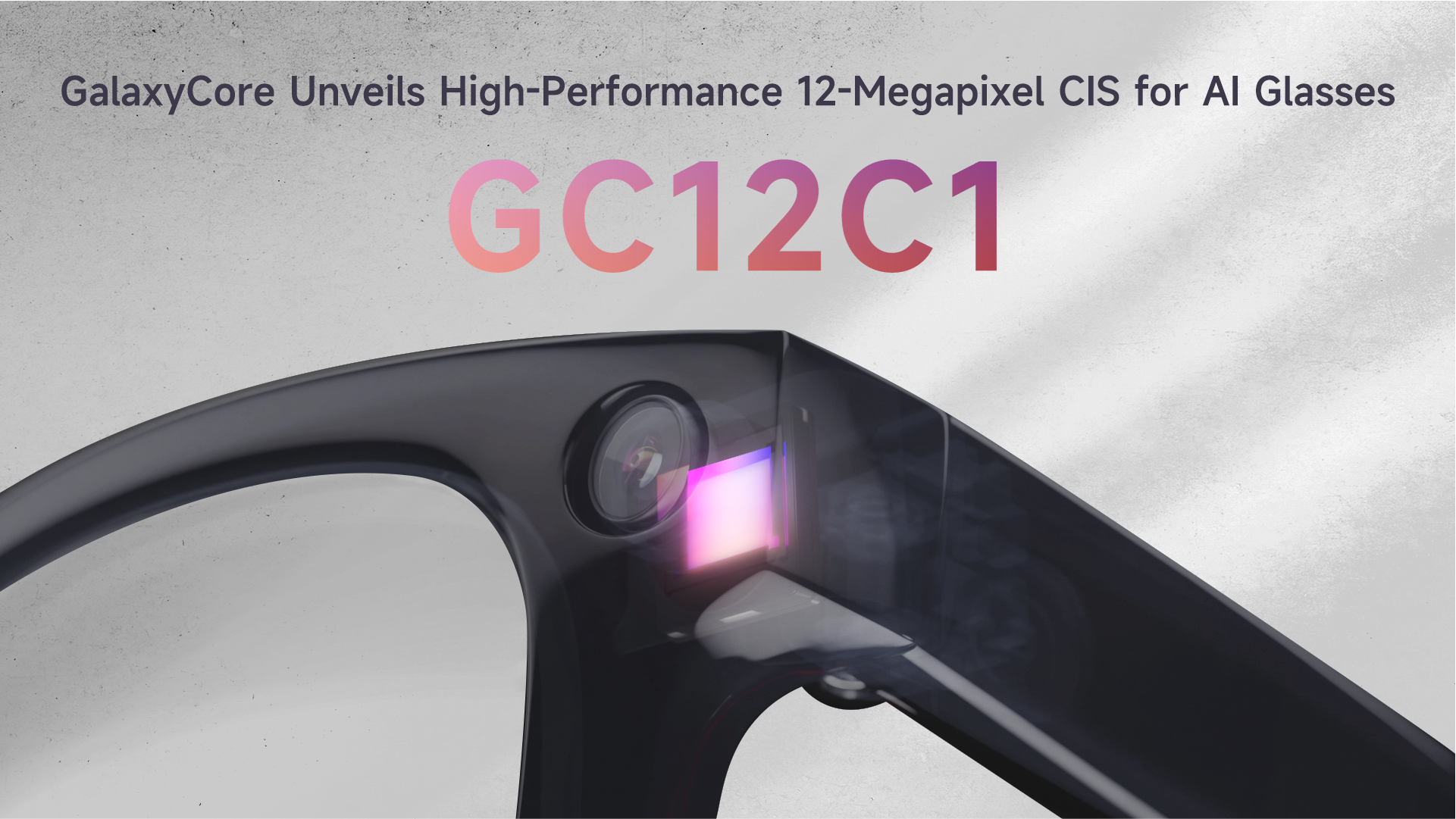
The AI glasses market is entering its first wave of rapid growth. Based on data from Sigmaintell, global shipments of AI smart glasses are expected to increase by over 110% year on year in 2025. “Hands-free” photo and video capture is one of the most distinctive user experiences offered by AI glasses. Achieving stable, higher-quality image data within the limited module space and battery capacity has become a key challenge.
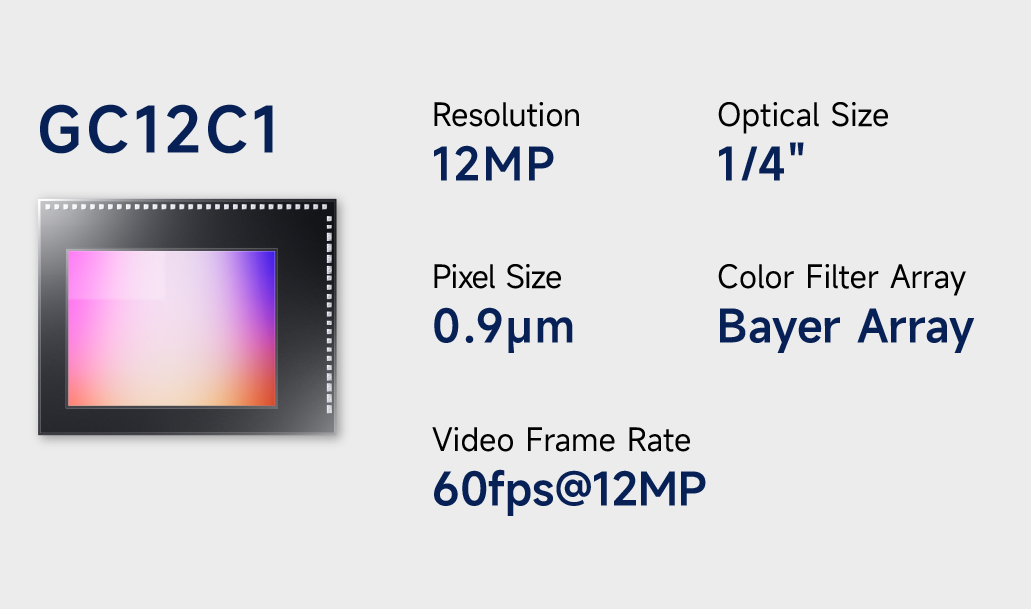
GalaxyCore recently launched the GC12C1, a high-performance non-stack 12-megapixel image sensor designed for AI glasses and other smart devices. The product features a 1/4-inch optical size and a module size of 6.5 mm × 6.5 mm, enabling a compact system layout.
Based on GalaxyCore’s non-stack technology, the GC12C1 leverages two core advantages—AON low-power and DAG single-frame HDR imaging—to deliver a cost-effective imaging solution for smart terminals.
DAG Single-Frame HDR Imaging for Complex Lighting Conditions
AI glasses operate across diverse indoor and outdoor environments, often facing backlighting, high-contrast scenes and rapid lighting transitions. Under such conditions, traditional imaging solutions are prone to highlight overexposure or loss of detail in shadowed areas.
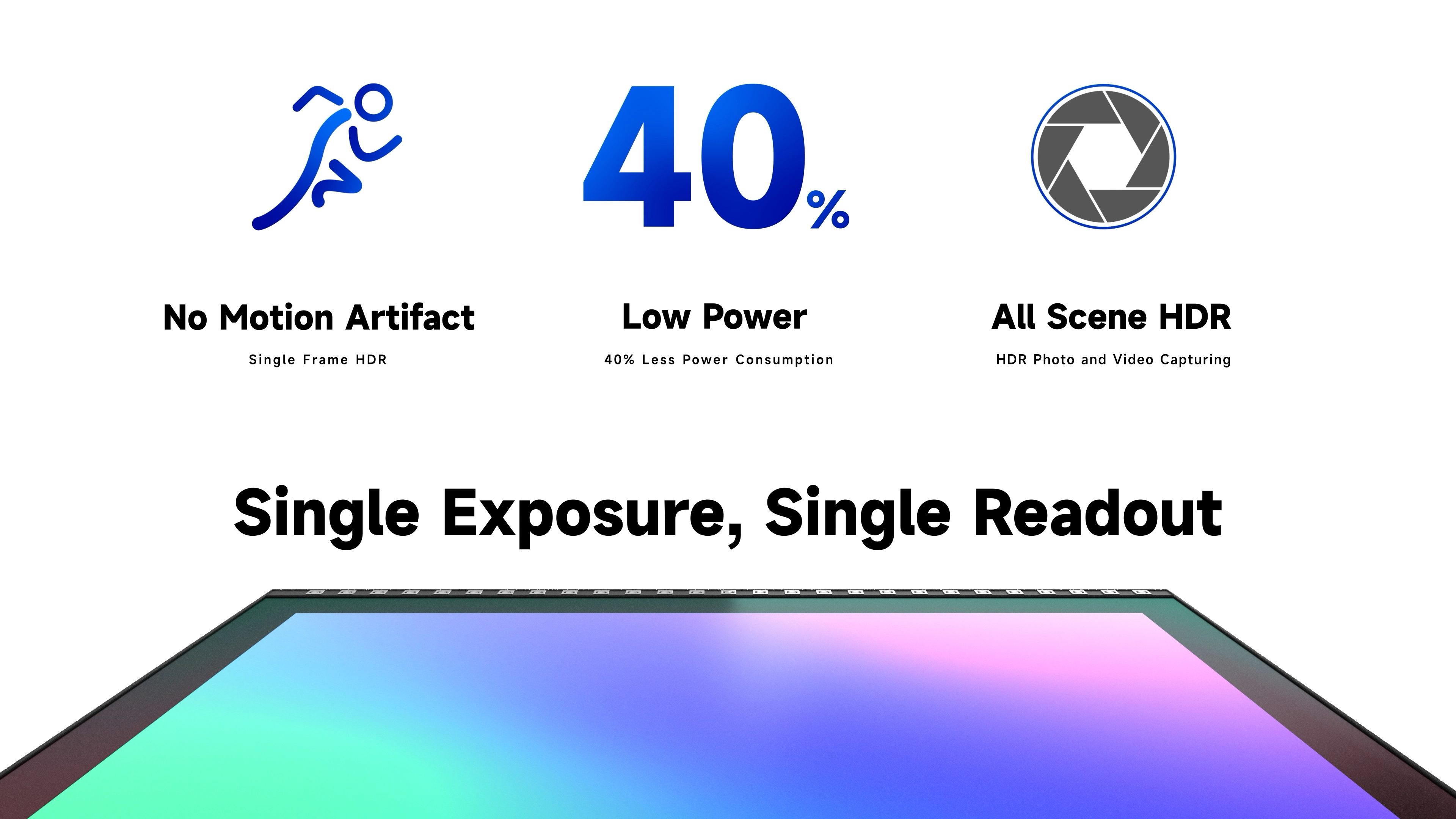
GC12C1 supports GalaxyCore’s proprietary DAG single-frame HDR imaging technology, applying high conversion gain in dark regions to enhance detail reproduction, while using low conversion gain in bright regions to prevent overexposure. As a result, the sensor can output 12-bit HDR images and video. Compared with conventional multi-frame HDR solutions, this solution reduces HDR video power consumption and avoids motion artifacts.
Low-Power Design with AON
AI glasses have to operate for extended periods, while their battery capacity remains limited, placing stringent demands on power efficiency. The GC12C1 reduces power consumption and system heat while maintaining imaging quality. Measured data show that, compared with the previous-generation product, the GC12C1 achieves about a 19% reduction in power consumption, helping to extend device battery life and improve wearing comfort.
As AI glasses evolve from simple image capture toward real-time perception and intelligent interaction, image sensors are required to operate continuously in the background. The GC12C1 supports an AON (Always On) low-power mode, enabling continuous environmental monitoring at ultra-low power and triggering system responses when key events are detected. This capability supports features such as instant wake-up and scene recognition.
Enhancing Low-Light Imaging Using FPPI Patented Technology
In low-light environments, imaging quality directly determines the “usability” of AI glasses. The GC12C1 incorporates GalaxyCore’s proprietary FPPI® pixel isolation technology, optimizing key performance metrics such as read noise. Compared with the 1.0 μm pixel product, the GC12C1 achieves a 27% reduction in read noise with smaller pixels, effectively enhancing overall signal-to-noise ratio and delivering cleaner low-light images.
12-megapixel image sensors are widely favored by brands due to their balance between compact size and resolution. Industry data show that 12MP sensors account for over 90% of the market. The launch of GalaxyCore’s GC12C1 provides the AI glasses market with a HDR, low-power imaging solution.
In addition to AI glasses, the GC12C1 is also suitable for space-constrained smart devices such as thin-and-light laptops and ultra-slim smartphones. The product is currently available for sampling.
To address the evolving form factors of next-generation smart terminals, GalaxyCore will continue to iterate its products, enhance image sensor performance, and optimize power efficiency, delivering stable and reliable imaging solutions across more devices.